

Mint Luster vs. Shiny Surfaces: What to Look for Under a Light
Updated: Nov 12
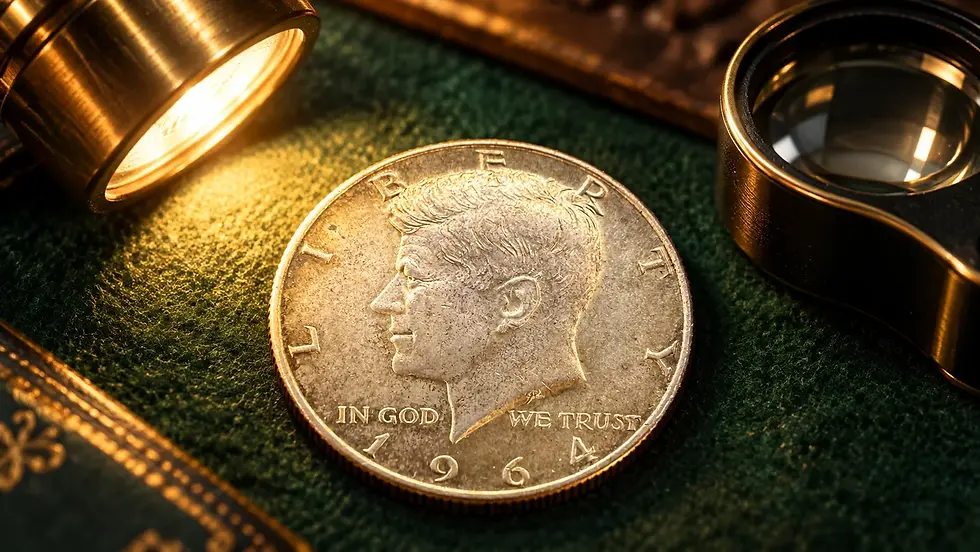
A shiny coin can attract attention without telling you whether its surface is original. Mint luster concerns the way light reflects from the surface, including its pattern, rather than brightness alone. Polishing, photography and the original method of manufacture can all complicate an impression based on a single image.
Use a consistent light and a careful observation routine. The goal is to gather better evidence, not to declare a numerical grade or cleaning history from one dramatic reflection.
Learn what luster describes
PCGS includes luster among the factors considered in Mint State grading and describes it through reflected light. Its glossary connects the familiar cartwheel effect with light interacting with radial flow lines created during striking.
That explanation does not mean every legitimate coin must display the same visual pattern. Different issues and production finishes can look different. Establish the coin's type and expected finish before treating one appearance as the only acceptable standard.
Our proof versus uncirculated guide explains why production method and condition terminology need to remain separate. A mirrorlike field does not by itself prove that a coin is a Proof.
Build a repeatable viewing setup
Work above a soft surface and hold a loose coin by its edges. Use a stable light and slowly change the coin's angle while watching how the reflection moves. Begin with unaided viewing, then use magnification for specific surface details.
Keep the viewing distance and light position reasonably consistent. If the surface is overwhelmed by a bright white glare, adjust the angle rather than interpreting the glare as missing detail. Do not touch the surface to point out an area.
If the coin is in a holder, account for reflections and scratches in the plastic. Do not open a sealed grading holder simply to improve a casual inspection. Ask for additional views when the packaging limits what can be assessed.
Describe a pattern instead of writing shiny
Note where the reflected light moves, whether the appearance differs between the fields and high points, and which areas remain difficult to judge. Keep a distinction between a direct observation and a proposed explanation.
For example, saying that a bright reflection obscures the right field is more precise than calling the field flawless. Saying that an area appears dull under the current light does not establish why it looks that way.
MCC's 1964-D Kennedy half dollar offers an actual specimen reference. Its still photographs do not guarantee a particular luster assessment or grading result. An in-hand examination can reveal information that a fixed photograph omits.
Do not confuse manufactured shine with restoration
NGC explains that cleaning can irreversibly alter surfaces. Removing a surface's appearance does not recreate the original microscopic features. A polished coin can look bright while no longer retaining the surface characteristics collectors seek.
Do not rub, brush or polish a coin to test whether luster returns. Study documented examples from reliable educational sources and seek an assessment for an important specimen. The observation process should preserve the evidence you are trying to understand.
Our cleaning and conservation guide covers the broader intervention question. This article focuses on recognizing the limits of brightness as evidence.
Photograph and compare without overclaiming
Use more than one lighting angle and preserve the original files. A short video may communicate moving reflections better than one image, but it still does not replace a complete condition assessment. Avoid filters or selective exposure that hide surface concerns.
When comparing sale prices, match the issue and relevant certified condition where possible. Do not choose an exceptional auction result because both coins appear equally shiny in thumbnails. Asking prices and theoretical metal content remain separate from completed-sale evidence.
The MCC photography guide helps create useful images. Save notes about their limitations with the coin's inventory record so a future reader understands what was actually examined.
Frequently asked questions
Does a bright surface prove a coin is uncirculated?
No. Brightness alone does not establish wear, originality or numerical grade.
Does every coin need a cartwheel effect?
No. Learn the expected characteristics of the issue and finish before applying a particular visual test.
Can polishing restore mint luster?
Polishing changes surfaces. It should not be used as a way to recreate or test original mint luster on a collectible.
Sources and research notes
References reviewed November 1, 2026. The cover is an original conceptual editorial illustration, not evidence of a particular historical coin or surface diagnosis.


Comments