

Why George VI Faces Left on the 1937 British Penny
Updated: Nov 12

On the 1937 British penny, George VI faces left. That can seem odd when you put the coin next to a George V penny, which also faces left. The Royal Mint’s custom is for a new monarch’s coinage portrait to face the opposite way from their predecessor’s. Edward VIII’s short reign explains the apparent gap in the sequence.
Original photographs from the MCC collection
Collection example: 1937 UK One Penny. Uncrowned George VI portrait facing left, surrounded by a royal legend including IND:IMP. Numerous fine surface lines and small dark areas are visible. Britannia seated facing right with trident and shield, lighthouse at left, ONE PENNY and date 1937 below. Long lines cross the lower reverse; uneven coloration is visible.
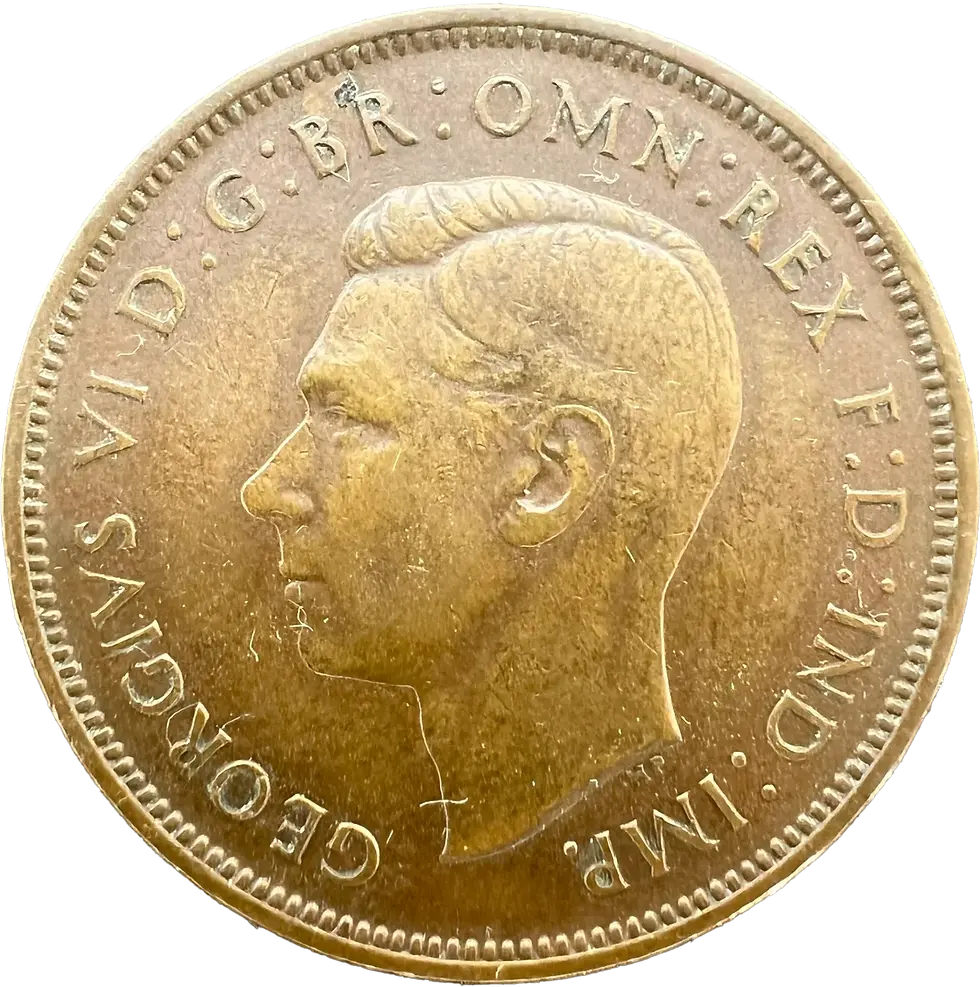

Compare the original specimen photographs with the issue described in this guide. They document design and visible surfaces; they are not a professional grade or confirmation of a rare variety. View the full coin record for specifications and related videos.
Read the coins in order of succession
George V and the portrait that did not reach circulation
George V faces left on MCC’s 1919 penny. Under the usual convention, Edward VIII would face right. The Royal Mint Museum records that Edward wanted to show his preferred left profile. Pattern pieces were prepared accordingly, but his abdication in December 1936 came before his portrait coinage went into circulation. A pattern is a trial or proposed issue, and it has a different collecting history from an everyday penny.
George VI resumes the convention
The Mint treated the sequence as if Edward had faced right. George VI therefore faced left in the portrait prepared by Humphrey Paget. On MCC’s 1937 British penny, the nose points toward the left edge when the lettering is upright. Follow the inscription to GEORGIVS VI. That numeral establishes the monarch even when a small or poorly lit photograph makes the portrait hard to recognize.
Elizabeth II’s first portrait faces right, as the Royal Mint explains in its account of her early coinage. You can compare the direction on MCC’s 1954 threepence without needing to compare coins of the same denomination.
Use direction as one clue
Turn the penny over for the date. On the 1937 issue, the year is below Britannia, while the monarch’s name and portrait are on the opposite face. Save a photo of each side in its normal reading orientation. An image mirrored by a camera app will reverse the letters as well as the portrait. If the name seems to read backward, check the original photo before drawing a conclusion.
If you are keeping a record or evaluating a listing, write the monarch, year and denomination together. A left-facing portrait on a circulated 1937 penny is expected, so compare prices with other George VI pennies of the same issue and condition. See MCC’s guide to British coin inscriptions to read the rest of the obverse.
Frequently asked questions
Do George V and George VI really face the same way?
Yes. The two circulating portraits face left. Edward VIII was between them in the succession, and his proposed portrait coinage did not reach circulation.
Does facing left make a 1937 penny unusual?
The left-facing portrait is standard for George VI. Use the date, monarch and issue details for a rarity check.
Can I identify an Edward VIII pattern from its direction?
Direction is a starting clue only. An attribution needs the legend, denomination, documented pattern characteristics and specialist review.
Sources and further reading
Research checked November 9, 2026.


Comments